
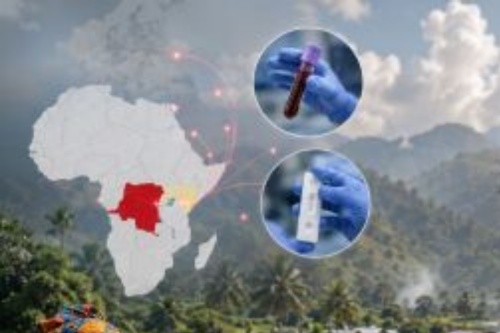
More than 500 suspected cases have been reported in the Democratic Republic of the Congo as scientists race to improve testing and develop vaccines for the Bundibugyo strain of Ebola.
Interest in Ebola has increased following reports that an outbreak caused by the Bundibugyo strain of Ebola virus in the Democratic Republic of the Congo may be spreading. As of May 20, health authorities in the DRC reported 515 suspected new cases, while neighboring Uganda reported 12 suspected cases. Scientists are working to improve diagnostic testing and accelerate the development of vaccines and treatments to help contain the outbreak.
An editorial published in Nature Medicine warns that “successes gained in the fight against infectious diseases are being eroded.”
Dr. Marianne Legato’s perspective on this emerging public health threat is clear:
“The assault on healthcare funding leaves us vulnerable to new catastrophes. The Ebola virus is of particular concern, and the burden of coping with containing the epidemic is being primarily borne by the World Health Organization. Competent information from the Department of Health and Human Services and the best scientific authorities in our own CDC are imperative.”
Dr. Legato points to several factors that are undermining global preparedness:
- Increased politicization of public health
- Growing public distrust of physician-scientists and vaccines
- Climate change and its effects on disease emergence
The result is a diminished capacity to respond effectively to new infectious disease threats.
As researchers continue to monitor this outbreak, many people are searching for reliable information about Ebola virus disease, how it spreads, and whether current vaccines and treatments are effective.
What Is Ebola?
Ebola Virus Disease (EVD) is a severe and often life-threatening illness caused by viruses in the Ebola family. Since it was first identified in 1976, Ebola has caused periodic outbreaks, primarily in Central and East Africa.
The disease can cause severe fever, bleeding complications, organ failure, and death.
How Does Ebola Spread?
Ebola spreads through direct contact with:
- Blood
- Vomit
- Saliva
- Urine
- Feces
- Sweat
- Semen
- Other bodily fluids from an infected person
The virus can also spread through contaminated medical equipment or surfaces that have been exposed to infectious bodily fluids.
Importantly, Ebola does not spread through casual contact.
What Does Gender Medicine Have To Do With Ebola?
One of the central questions in gender medicine is whether biological sex influences disease susceptibility, immune responses, treatment effectiveness, and long-term outcomes.
The Foundation provides fellowships to untenured, young faculty members with the goal of fostering their interest in gender-specific medicine at the beginning of their investigative careers.
Some of our previous grant awardees include: Delivette Castor, PhD in 2021 research focuses on implementing strategies to prevent and cure the human immunization virus (HIV) in both sexes and Jennifer Lillian Small-Saunders, MD, PhD whose research focuses on implementing strategies to prevent and cure the human immunization virus (HIV) in both sexes.
Research has demonstrated important sex-based differences in many infectious diseases.
Scientists continue to investigate whether men and women experience differences in:
- Immune responses to Ebola infection
- Disease severity
- Recovery patterns
- Vaccine responses
- Long-term complications
Understanding these differences may help improve prevention strategies, clinical care, and public health responses.
Is Ebola Airborne?
No.
Unlike viruses such as measles or COVID-19, Ebola is not considered an airborne disease.
Transmission requires direct contact with infected bodily fluids or contaminated materials.
This distinction is important because it significantly limits the ease with which Ebola spreads compared to respiratory viruses.
What Are the Symptoms of Ebola?
Symptoms typically begin between 2 and 21 days after exposure.
Early symptoms may include:
- Fever
- Severe fatigue
- Muscle pain
- Headache
- Sore throat
As the disease progresses, patients may develop:
- Vomiting
- Diarrhea
- Rash
- Internal bleeding
- External bleeding
- Organ dysfunction
Early diagnosis and treatment significantly improve survival.
How Deadly Is Ebola?
The fatality rate varies by outbreak and virus strain.
Historically, Ebola outbreaks have had mortality rates ranging from approximately 25% to 90%.
Access to medical care, hydration, supportive treatment, and newer therapies can dramatically improve outcomes.
Is There a Vaccine for Ebola?
Vaccines are available for some Ebola virus species, particularly the Zaire strain.
However, researchers are still working to develop and evaluate vaccines that provide protection against other strains, including Bundibugyo virus.
This is one reason the current outbreak is attracting significant scientific attention.
Is There a Treatment for Ebola?
Several treatments have improved outcomes for patients infected with certain Ebola strains.
Current care may include:
- Intravenous fluids
- Electrolyte replacement
- Oxygen therapy
- Blood pressure support
- Monoclonal antibody treatments
Researchers continue to investigate whether existing therapies are equally effective against Bundibugyo virus.
Why Is the Current Outbreak Concerning?
Several factors have raised concern among infectious disease experts:
- The number of suspected cases continues to grow.
- Cases have been reported in more than one country.
- Scientists are still evaluating diagnostic accuracy for this strain.
- Vaccine development remains ongoing.
- Public health systems worldwide face increasing funding pressures.
Many experts worry that reduced investment in public health infrastructure could limit the ability to respond quickly to future outbreaks.
The Bottom Line
The current Bundibugyo Ebola outbreak serves as a reminder that infectious diseases remain a significant global health challenge. While scientists are making progress in diagnostics, treatments, and vaccine development, experts warn that weakening public health systems and declining trust in science may leave societies less prepared for future outbreaks.
Continued investment in research, surveillance, public health infrastructure, and evidence-based medicine will be critical to protecting populations from emerging infectious disease threats.