
2025 Pilot Grant Awardee, Johns Hopkins
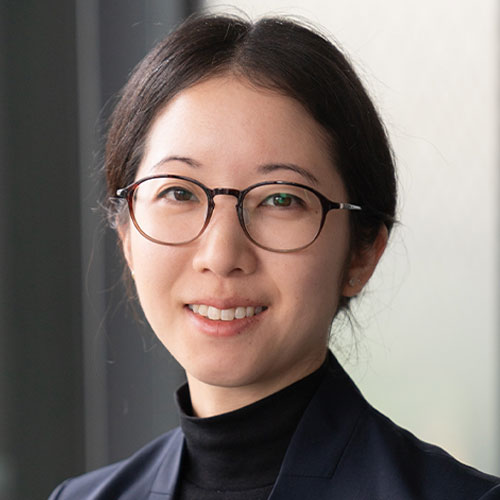
Dr. Kunitomo is a pulmonary and critical care physician and clinical researcher at Johns Hopkins University with a focus on the clinical epidemiology of chronic obstructive pulmonary disease (COPD). Her research has centered around comorbid diseases in the COPD population, in particular anemia and iron deficiency, with the goal of improving outcomes and quality of life through interventions targeting comorbid diseases. Long perceived as a disease of older men, COPD is now equally, if not more, prevalent among women. However, the underlying causes for sex differences observed in COPD disease pathogenesis and manifestations are not well understood. Dr. Kunitomo’s work seeks to better elucidate the sex differences in the impact of comorbid diseases in COPD and the differential impact of iron deficiency, a condition particularly important for women, to ultimately develop more personalized treatment approaches for COPD.
What is Dr. Yukiko Kunitomo researching?
Chronic obstructive pulmonary disease (COPD)
Why study comorbid diseases in people with COPD?
Improve symptoms, exercise capacity, survival, and quality of life in COPD by better identifying and treating these comorbid conditions.
What did Dr. Kunitomo find?
- She has shown that anemia and iron deficiency are common and clinically important comorbidities in COPD.
- In a recent study, she and colleagues found that:
- Iron deficiency was very prevalent in a large clinical COPD cohort (over half of patients).
- Iron deficiency was more common in women with COPD than in men. Pure
- Lower transferrin saturation (a marker of iron deficiency) was associated with higher risk of all-cause hospitalization, and this association was stronger in women than in men. Pure+1
Her ongoing work is aimed at determining whether:
- People with COPD and iron deficiency have worse symptoms,
- Lower exercise capacity, and
- Less benefit from pulmonary rehabilitation,
and whether more aggressive testing and treatment of iron deficiency could improve outcomes.
Conclusion: Kunitomo’s work is helping establish that iron deficiency and anemia are powerful, sex-influenced predictors of worse outcomes in COPD, especially in women, and may be high-value targets for intervention.
How did The Foundation for Gender-Specific Medicine’s grant help Dr. Kunitomo’s research?
The Foundation’s support via a seed grant on sex and gender differences, routed through the Johns Hopkins Center for Women’s Health, Sex, and Gender Research came just as she transitioned from fellow (trainee) to faculty.
The grant is doing two key things:
- Funding her COPD research on sex and gender differences, especially the role of iron deficiency and comorbidities.
- Providing partial salary support, which gives her protected time to conduct these projects rather than being fully consumed by clinical duties.
She also emphasizes that:
For her personally, the grant is more than money: it serves as validation and motivation, showing that others believe in the value and potential impact of her work on countless patients with COPD.
In an era of uncertain NIH/government funding, this kind of non-government support is critical to keep young physician-scientists in the pipeline.
What is Dr. Kunitomo‘s current status?
She continues to conduct clinical research on COPD, iron deficiency, anemia, and sex differences, and identifying and testing new, personalized therapies for COPD, with sex and gender differences as a central lens.