
2025 Dorothy Lambiase Derchin Scholar, NYU Grossman School of Medicine
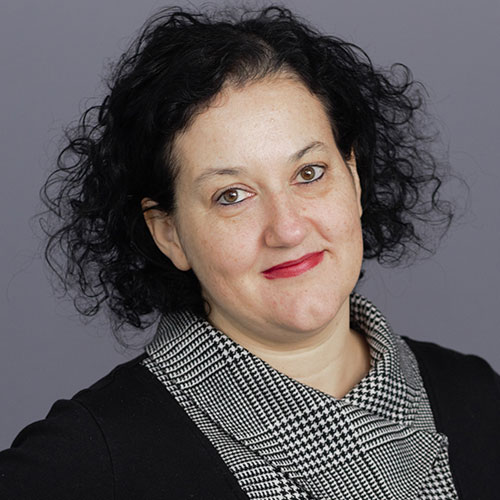
Dr. Orna Issler earned her BA in Biology and Psychology from Tel Aviv University. Next, she conducted her graduate research in Neurobiology at the Weizmann Institute of Science. During her graduate work in the laboratory of Dr. Alon Chen, she investigated microRNAs in the context of stress, anxiety, and depression. For her post-doctoral training, she joined the laboratory of Dr. Eric Nestler at Mount Sinai School of Medicine in New York. There, she expanded her interests in the molecular underpinnings of mood disorders to studying long non-coding RNAs with a focus on sex differences and women-specific mechanisms. Dr. Issler launched her independent research group at NYU Grossman School of Medicine in 2023 as part of the Departments of Neuroscience and Anesthesiology. There, she continues to pioneer the study of sex differences and non-coding RNAs in mental health disorders, combining genome-wide assays and gene-to-behavior approaches to achieve real translational impact. For her research, published in top scientific journals, Dr. Issler won multiple awards, including the ISPG Gershon Paper of the Year Award, the Leon Levy Fellowship, and the NARSAD Young Investigator Award.
What is Dr. Orna Issler studying?
Postpartum depression
Why study sex differences in mood disorders?
1. Women experience depression at twice the rate of men.
If one group is affected at double the rate, it is scientifically irresponsible not to investigate why. Yet historically, most basic research used only males—meaning researchers were missing half the picture. Studying sex differences helps uncover biological mechanisms that are unique to, or more pronounced in, women.
2. Female biology is not just “male biology with hormones.”
Dr. Issler explains that she was originally told females were “too complicated” to study because of hormonal cycles. Ignoring this variability has created a massive blind spot in medicine.
Sex differences impact:
- brain development,
- stress responses,
- immune function,
- gene regulation,
- and how treatments work.
Understanding these differences leads to better, more precise medical care for everyone.
3. Many mental health conditions are driven by molecular mechanisms we still don’t fully understand.
Non-coding RNAs—Dr. Issler’s specialty—play powerful regulatory roles in gene expression. Because they differ between males and females, they can:
- influence vulnerability to stress,
- shape individual responses to trauma,
- and determine who develops depression or anxiety-related disorders.
By studying these molecules, researchers can identify new biomarkers and therapeutic targets.
4. Postpartum depression is uniquely female and severely understudied.
Postpartum depression affects 1 in 7 women after childbirth and can impact mothers, infants, and long-term child development.
Studying this condition specifically:
- uncovers what puts certain women at risk,
- supports early diagnosis,
- and helps guide the development of targeted treatments.
This research directly improves maternal and family health.
5. Equity in scientific knowledge = equity in healthcare.
Historically, women have been underrepresented in research, leading to:
- misdiagnosed symptoms,
- less effective medications,
- and medical guidelines based largely on male physiology.
Dr. Issler and gender-specific medicine more broadly aims to correct this inequity. The goal is not to separate men and women, but to ensure both are understood and treated accurately.
6. Better science leads to better outcomes for everyone.
Understanding sex differences doesn’t only help women. It improves safety profiles for medications for both sexes, diagnostic precision, treatment personalization.
What did Dr. Issler find?
In her postdoctoral work, when she began explicitly comparing males and females, she found pronounced molecular sex differences in depression, in both the brain and the blood. From this work, she and colleagues have shown that specific non-coding RNAs can:
- distinguish depressed from non-depressed individuals and act as potential blood biomarkers of depression, and
- regulate susceptibility vs. resilience to stress via long non-coding RNAs in the brain, with effects that can be female-specific. NYU Langone Health
How did The Foundation for Gender-Specific Medicine’s grant help Dr. Issler’s research?
The Foundation’s support, through naming her the Dorothy Lambiase Derchin Scholar in Gender-Specific Medicine, provides crucial funding right as she is launching her independent lab and at a time when explicitly focusing on “women” or “female” can make federal grants harder to obtain. The Issler Lab
What is Dr. Issler’s current status?
Dr. Issler is currently an Assistant Professor in the Department of Neuroscience and the Department of Anesthesiology, Perioperative Care, and Pain Medicine at NYU Grossman School of Medicine, where she leads the Issler Lab and serves as the 2025 Dorothy Lambiase Derchin Scholar in Gender-Specific Medicine. NYU Langone Health Faculty