
2026 Seed Grant Awardee, Johns Hopkins
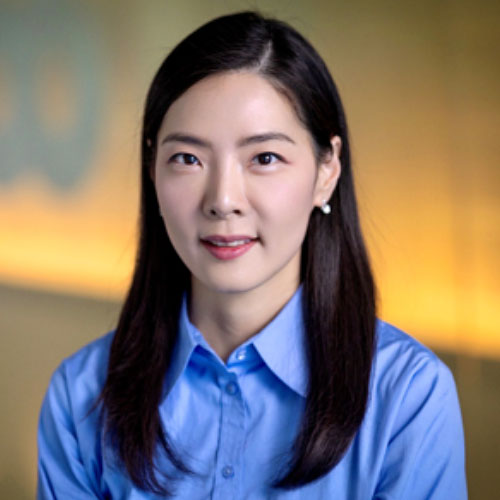
Dr. Heyjun Park is an Assistant Professor in the Human Nutrition Program within the Department of International Health at the Johns Hopkins Bloomberg School of Public Health. She received her PhD in Human Nutrition from Cornell University, completed postdoctoral training in the Department of Genetics at Stanford University School of Medicine, and is a Registered Dietitian credentialed through clinical training at UCSF Medical Center. Her research examines how nutrition shapes maternal and child health across critical developmental periods, using metabolomics, nutritional biomarkers, wearable monitoring, and population-based analyses to understand how biological responses to nutrition vary across individuals and physiological states.
What is Dr. Heyjun Park researching?
Dr. Park studies how nutrition during pregnancy and early life influences maternal and child health, with a particular focus on biological differences related to reproductive state and infant sex. Her work integrates nutrient biomarkers, untargeted metabolomics, and population-level analyses to understand not only what women consume, but how their physiology responds to nutritional exposures.
A central theme of her research is that pregnancy represents a unique metabolic state. Maternal nutritional metabolism operates differently in pregnancy than in the non-pregnant state, and may further differ depending on infant sex. Her work seeks to identify the metabolic pathways through which maternal nutritional physiology influences fetal growth and development.
Why study early-life nutrition and maternal metabolic health?
Pregnancy and infancy are among the most important periods for lifelong health. Nutritional and metabolic conditions during these windows help shape developmental programming, fetal growth, and future cardiometabolic health in both mother and child. Yet many nutritional and related biomarker cut-offs currently used in medicine were largely developed in non-pregnant adults and may not fully capture the unique physiology of pregnancy.
Pregnancy substantially reshapes how the body absorbs, metabolizes, and responds to nutrients. At the same time, growing evidence suggests that maternal metabolism and placental biology differ between male and female pregnancies, although these differences are not yet well characterized in nutritional and metabolic research.
Dr. Park’s research addresses this gap by integrating metabolomics and biomarker-based approaches to better understand how maternal nutritional physiology changes during pregnancy and how these metabolic adaptations may differently influence male and female fetal development.
What has Dr. Park found?
During her doctoral training at Cornell University, Dr. Park demonstrated that pregnant and non-pregnant women maintain different vitamin D metabolism even when consuming equivalent dietary intakes in a controlled feeding trial, and that common genetic variation further modifies these responses. She also showed that the human placenta can produce active vitamin D, identifying the placenta as an under recognized contributor to vitamin D biology during pregnancy.
During her postdoctoral training at Stanford University, she used multi-omics and machine learning approaches to demonstrate that underlying metabolic state, including insulin resistance, influences how individuals respond to habitual dietary exposures.
In her current work supported by this Foundation seed grant, Dr. Park is analyzing third-trimester maternal metabolomics data from pregnancies in the JiVitA-3 trial in rural Bangladesh. Her preliminary analyses show a consistent pattern in which maternal metabolites associated with larger birth size in female pregnancies often show inverse associations in male pregnancies across birth weight, birth length, and head circumference. These findings support the project’s central hypothesis that maternal metabolism may communicate differently with the developing fetus depending on infant sex.
Together, her work highlights how biological responses to nutrition are shaped by physiological context, including reproductive state, metabolic background, and the sex of the developing infant.
Her published papers can be found on Research Gate here.
Her paper published in April 2026 on Use of Continuous Glucose Monitoring With Machine Learning to Identify Metabolic Subphenotypes and Inform Precision Lifestyle Changes can be found here.
Dr. Park’s research output can also be found on Johns Hopkins website here.
How did The Foundation for Gender-Specific Medicine’s grant help Dr. Park’s research?
The Foundation’s seed grant, awarded through the Johns Hopkins Center for Women’s Health, Sex and Gender Research, supports Dr. Park’s project, Sex-Differential Maternal Metabolites and Infant Growth. The project combines metabolome-wide interaction analyses with network-based approaches to identify maternal metabolites whose relationships with infant birth size differ by infant sex.
The analysis also examines how metabolic modules identified in the data align with maternal nutritional and inflammatory physiology measured in the cohort, including micronutrient status, inflammation, and lipid metabolism.
The grant supports the analytic phase of this work and helps generate the preliminary data and effect size estimates needed to develop a future, larger NIH grant application on sex-specific maternal metabolic programming. It also connects Dr. Park with a broader community of investigators advancing research in women’s health and sex-specific medicine at Johns Hopkins.
What is Dr. Park’s current status?
Dr. Park is an Assistant Professor in the Human Nutrition Program within the Department of International Health at the Johns Hopkins Bloomberg School of Public Health. Her current work includes Foundation-funded analyses of sex-differential maternal metabolites and infant growth, collaborations on micronutrient supplementation and adolescent health, and research integrating metabolomics, biomarkers, and wearable monitoring to better understand maternal and child health trajectories.
She is also involved in national efforts related to artificial intelligence (AI) and machine learning applications in nutrition research through a joint taskforce of the American Society for Nutrition and the Academy of Nutrition and Dietetics.
Her broader research program aims to integrate metabolomics and biomarker-based approaches to better characterize nutritional physiology in women across pregnancy and early life.